1 What is Algo Trading and Why is It Exploding in India?
For decades, algorithmic trading was the exclusive domain of high-frequency quant firms in Mumbai's Bandra Kurla Complex (BKC) with multi-million dollar co-located servers. Today, modern broker APIs and cloud webhooks have democratized quantitative execution for everyday retail traders.
At its core, algorithmic trading simply means converting your trading rules into an automated protocol: when Condition A (e.g., 15m candle closes above resistance) and Condition B (Volume > 1.5x) occur, execute Order C with predefined stop-loss and target automatically.

2 Why Humans Fail Where Algorithms Flourish
Execution Parameter | Manual Discretionary Trading | Automated Systematic Algo |
|---|---|---|
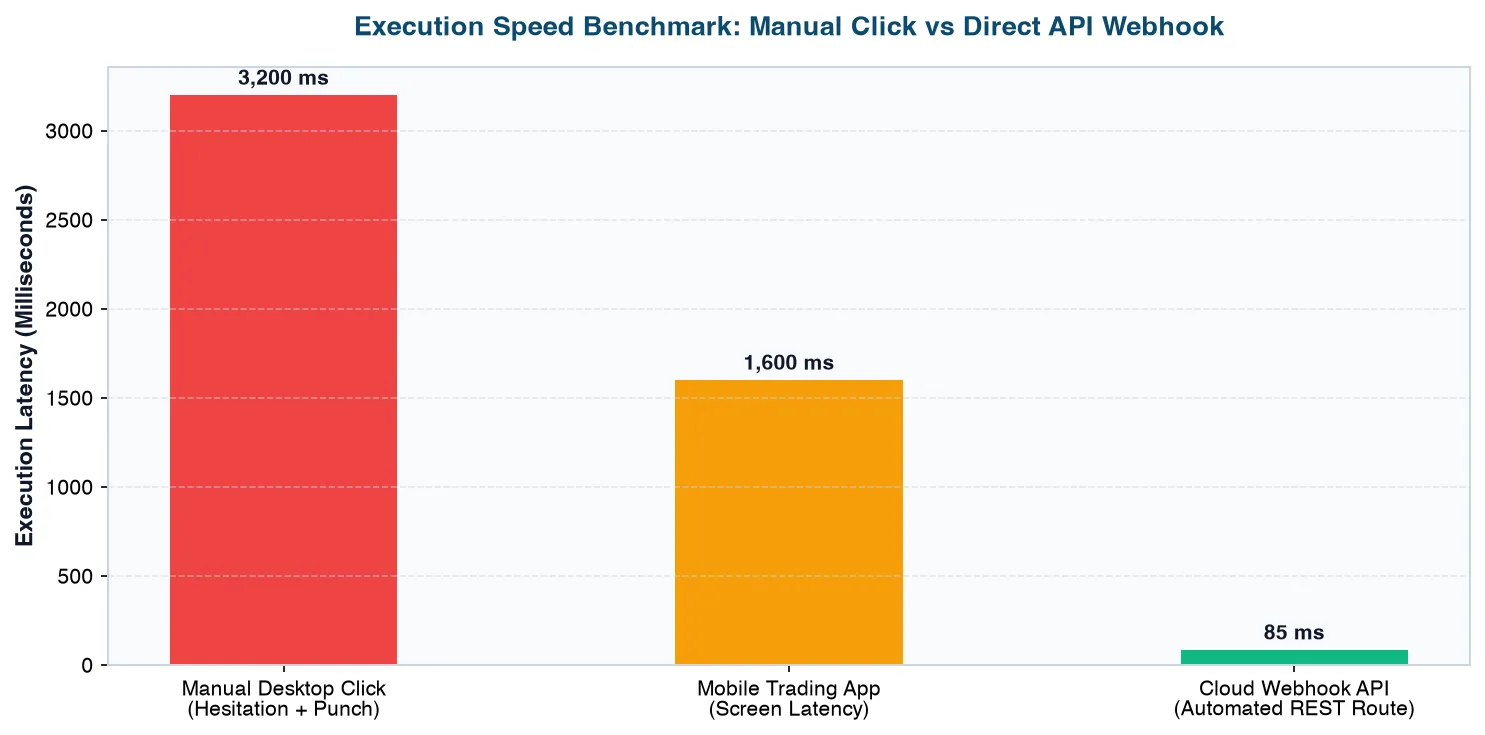
Order Entry Speed | 3 to 8 seconds (hesitation, doubt) | 50 to 150 milliseconds via API |
Stop-Loss Discipline | Often moved or cancelled out of fear | Programmatically fired with zero hesitation |
Emotional Fatigue | Severe mental strain after 2 hours of staring | Zero fatigue; executes 100th trade like the 1st |
Risk Adherence | Prone to revenge trading after a loss | Strictly obeys fixed percentage position sizing |
3 The 4-Step No-Code Automation Roadmap
Step 1: Choose an API-First Broker (Dhan / Zerodha)
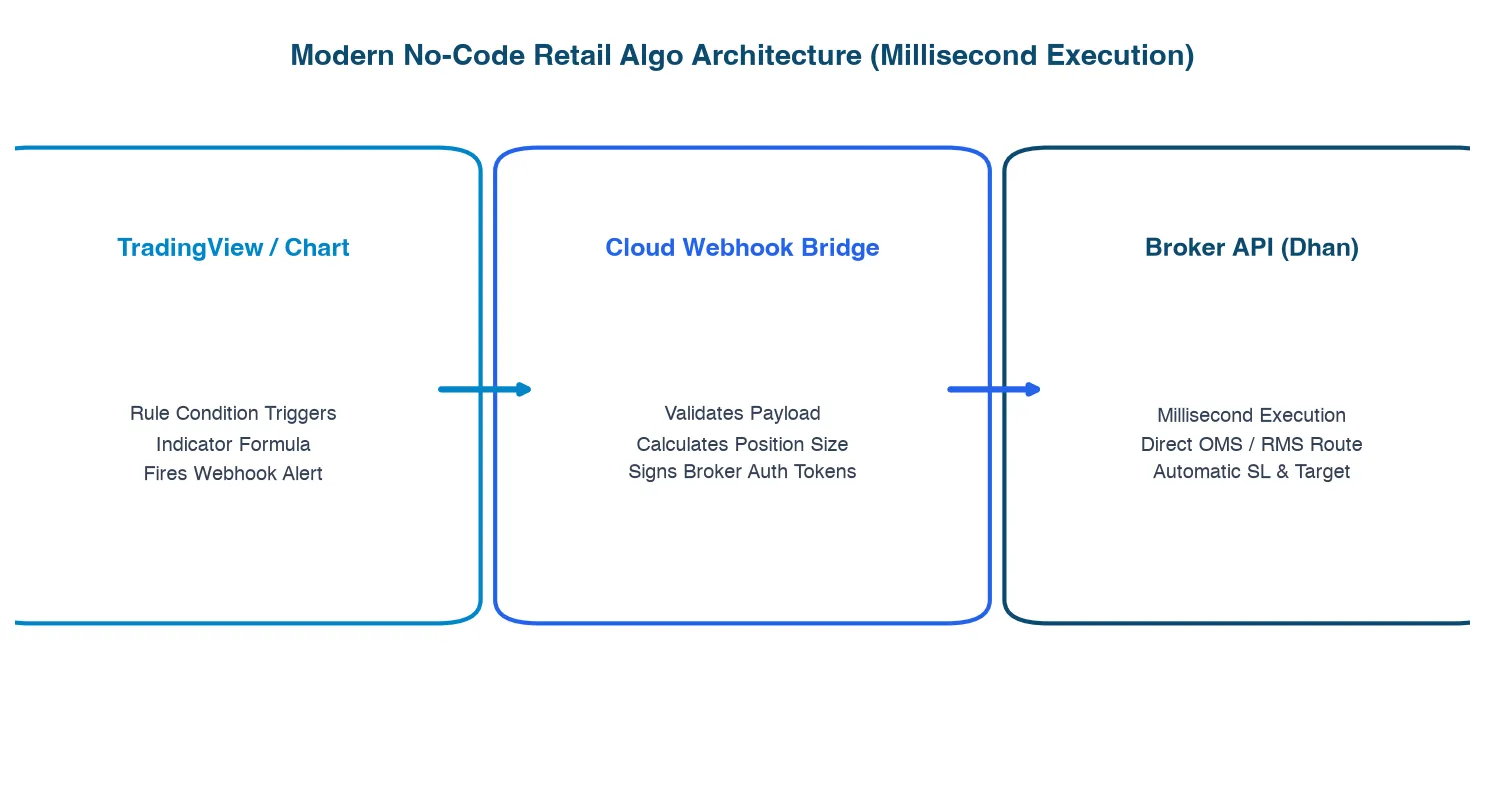
Select modern Indian brokers that provide free, robust REST APIs with webhook support. Brokers like Dhan offer seamless integration with webhooks and zero API subscription costs for retail accounts.
Step 2: Define Rules on TradingView
Build your rule conditions on TradingView charts (or use proven quant scanners like DailyTrades). Configure alert webhooks that fire automated JSON payloads when your setup triggers.
Step 3: Connect via Webhook Bridge
Use no-code bridge connectors (or Python microservices) that parse incoming TradingView alerts and instantly translate them into broker order requests.
Step 4: Paper Testing & Sandbox Validation
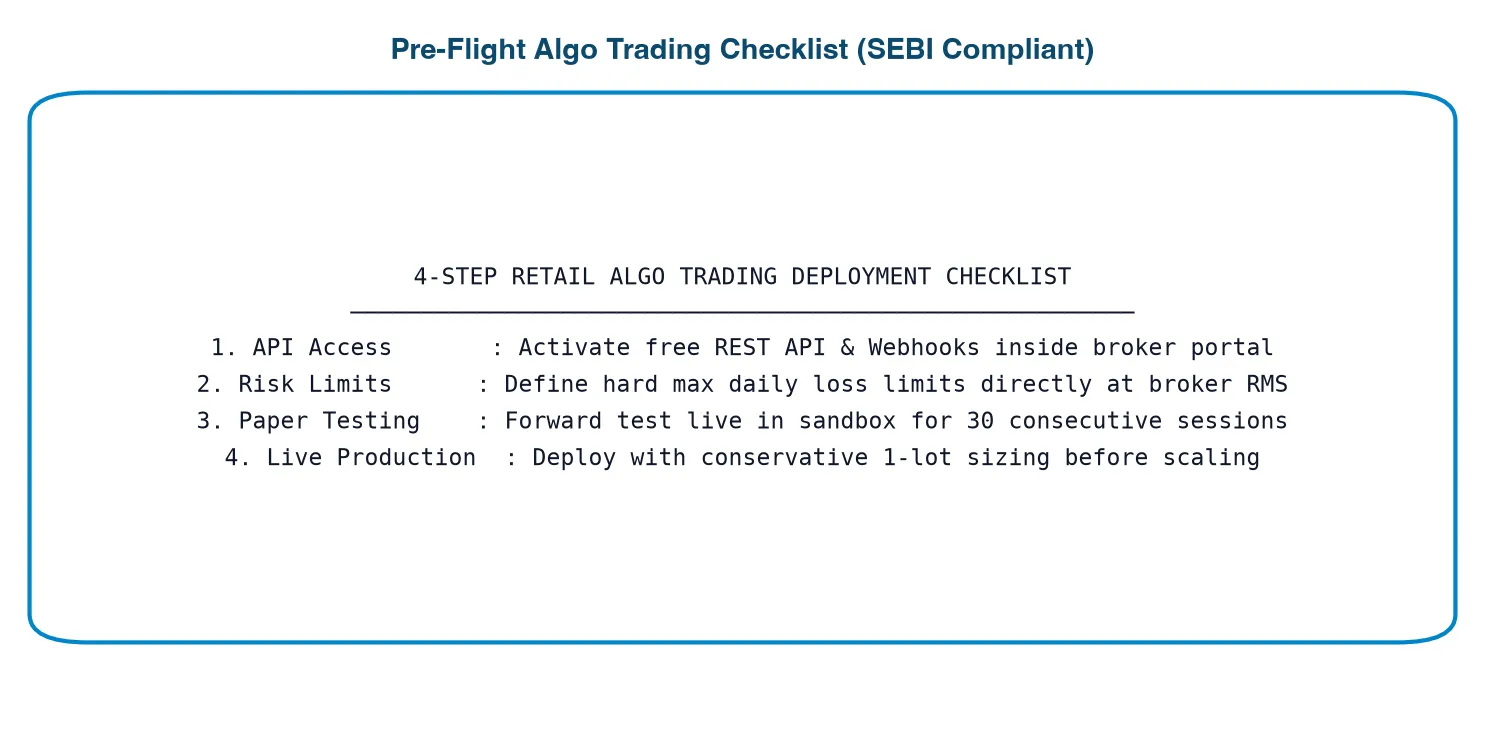
Never connect real capital on Day 1. Run live paper testing for at least one full expiry cycle to verify connectivity, slippage, and edge performance.
SEBI mandates that automated trading protocols operate through official broker-approved API endpoints with valid user authentication (TOTP & JWT tokens) renewed on a daily basis.