How Amazon and Flipkart Make Money During Big Billion Days
Bigger discounts. Bigger orders. But how do they earn?
Let’s break down the business behind India’s biggest online festive sales.
Introduction: Are They Really Making Money by Giving Discounts?
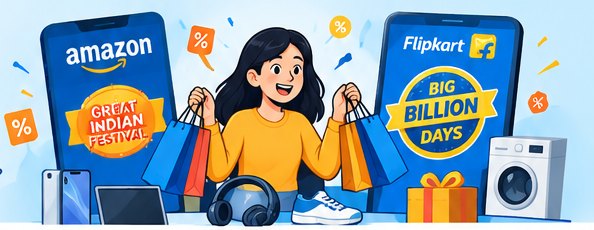
Every year, millions of Indians wait for Flipkart’s Big Billion Days and Amazon’s Great Indian Festival. Customers buy smartphones, laptops, clothes and home appliances at discounted prices.
But how do these companies make money when they offer such huge discounts? The answer is that they earn through multiple sources—not just by selling products.

1. Seller Commission: Getting Paid for Every Sale
Amazon and Flipkart allow thousands of sellers to list products on their platforms. Sellers get access to millions of potential customers without building their own large shopping websites.
In return, a marketplace may charge selling fees or commission according to the product category and seller agreement.
This is an illustrative calculation, not an actual fee quotation. The platform also has expenses, so ₹160 is revenue—not necessarily profit.

2. Advertising: Brands Pay for Attention
Have you noticed products marked “Sponsored” when searching online? Brands pay for advertising placements to make their products more visible to customers.
During festive sales, competition for attention can increase as many brands want shoppers to choose their products. The marketplace earns advertising revenue in addition to applicable selling fees.

3. Delivery and Fulfilment Services
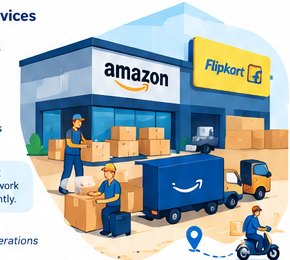
An online order must be processed, packed, transported and delivered. These activities require warehouses, employees, delivery vehicles and technology.
Marketplaces may earn fees by providing or arranging fulfilment and shipping services for sellers. A seller with thousands of orders may use the platform’s logistics network instead of managing every delivery independently.
Delivery revenue is not pure profit: transportation, packaging and warehouse operations also cost money.
4. How Can They Offer Huge Discounts?
A common misunderstanding is that the marketplace pays for every discount itself. In reality, a promotion may be funded by the seller, manufacturer, marketplace or a combination of them.
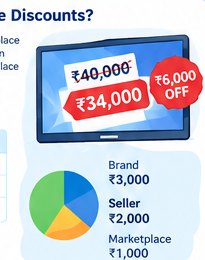
Imagine a television with a regular selling price of ₹40,000 that is available for ₹34,000 during a sale.
One hypothetical way to share the ₹6,000 discount:
Contribution | Amount |
|---|---|
Brand | ₹3,000 |
Seller | ₹2,000 |
Marketplace | ₹1,000 |
These figures are only an example. Actual discount arrangements vary by offer.
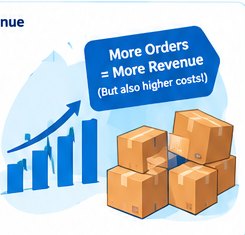
5. More Orders Can Mean More Revenue
Big festive sales can generate a huge number of orders in a short period. Suppose a marketplace generates an average of ₹200 in transaction-related revenue per order.
Number of orders | Illustrative revenue |
|---|---|
1,000 | ₹2 lakh |
10,000 | ₹20 lakh |
1,00,000 | ₹2 crore |
These are illustrative numbers, not the actual earnings of Amazon or Flipkart. More orders also mean higher operating costs.
6. Winning Customers for the Future
Festive sales can attract new customers to a platform. Someone who buys a laptop during Big Billion Days may later return to purchase clothes, kitchen appliances or headphones.
The company gets another opportunity to earn revenue from future transactions, advertising and related services. Marketplaces may spend money on promotions today to build longer-term customer relationships, although the investment must pay off over time.

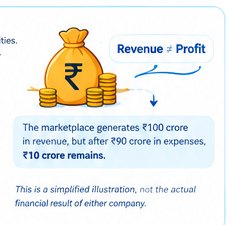
7. Revenue Is Not the Same as Profit
Revenue is the money a company earns from its business activities. Profit is what remains after the relevant expenses are deducted.
Particulars | Amount |
|---|---|
Total revenue | ₹100 crore |
Logistics expenses | ₹30 crore |
Promotions and advertising | ₹25 crore |
Employee and technology costs | ₹20 crore |
Other operating costs | ₹15 crore |
Operating surplus | ₹10 crore |
In this simplified example, ₹100 crore in revenue minus ₹90 crore in listed expenses leaves ₹10 crore. This is an illustration, not the actual financial result of either company.
Conclusion: The Business Behind Big Billion Days
Amazon and Flipkart use a business model that combines seller fees, advertising, fulfilment services, customer acquisition and other revenue sources.
Festive sales attract customers with discounts while creating opportunities to earn money from millions of transactions. The key lesson is simple: selling more products does not automatically make a company profitable. It must generate enough revenue to cover the costs of running its business.